What Is an SDR? How Sales Development Representatives Accelerate B2B Growth
If you’ve been exploring ways to grow your B2B sales operation, you’ve probably come across the term “SDR.” Sales Development Representatives are one of the most powerful yet misunderstood roles in modern B2B sales — and for companies looking to scale their outreach without bloating their headcount, understanding how SDRs work (and how to support them with the right tools) can be transformative.
What Is an SDR?
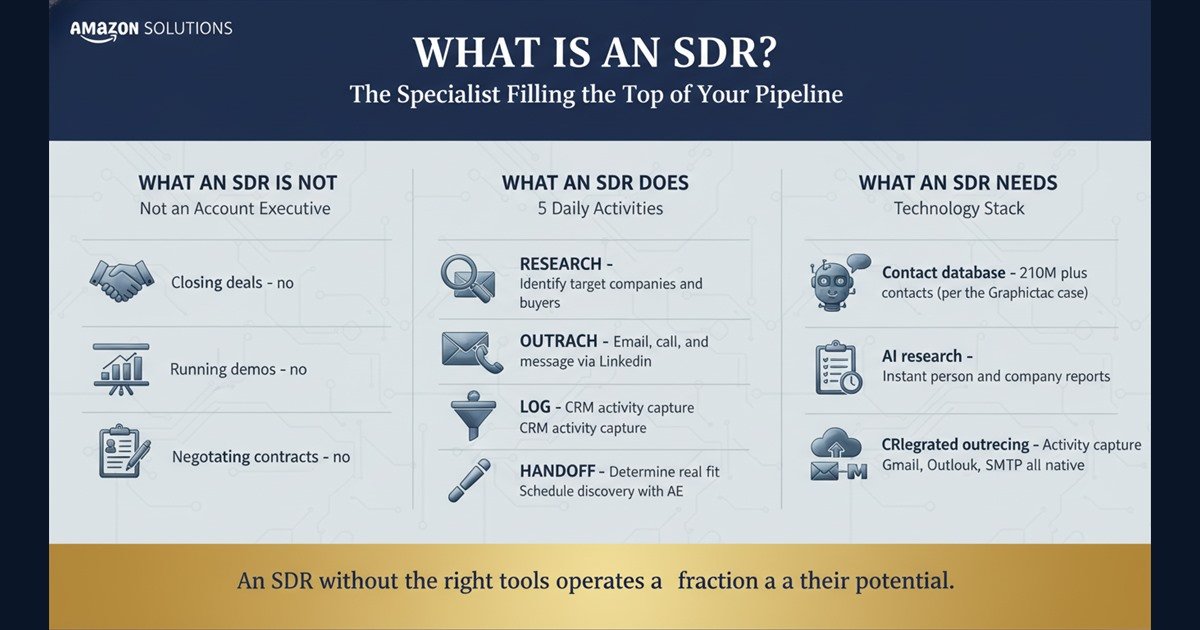
A Sales Development Representative — or SDR — is a specialized sales role focused exclusively on the early stages of the sales funnel. Unlike an Account Executive (AE) who closes deals, an SDR’s job is to identify, research, and qualify new prospects, then hand them off to a closer once they’ve expressed genuine interest.
Think of it this way: if your sales funnel is a pipeline, the SDR is responsible for filling it. They do the prospecting, make the first contact, overcome initial objections, and determine whether a lead is worth pursuing further. When done well, this division of labor dramatically increases the overall productivity of your sales team — closers can focus on closing, while SDRs keep the top of the funnel full.
What Does an SDR Actually Do Day-to-Day?
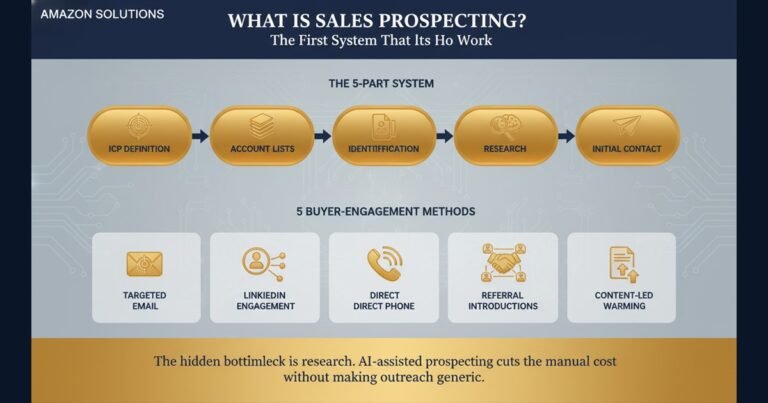
A typical SDR’s daily workflow revolves around several core activities. They research prospects by identifying target companies and contacts, often using databases, LinkedIn, and company websites to build a list of qualified leads. They then conduct outreach by sending cold emails, making cold calls, and following up through multiple channels to get in front of decision-makers. Each interaction is logged in the CRM so nothing is missed and the full history is visible to the team. Based on initial conversations, SDRs determine whether a prospect is a realistic fit and ready to move forward in the sales process. Once a prospect is qualified, the SDR schedules a discovery call or demo with an Account Executive. This entire cycle repeats every day, for every prospect, across a constantly evolving pipeline.
Why SDRs Need the Right Technology to Be Effective
An SDR without good tools is an SDR operating at a fraction of their potential. Here’s the reality: an SDR managing 100+ active prospects simultaneously — across different stages of outreach — cannot do their job effectively with a spreadsheet and a Gmail inbox. They need a purpose-built system that supports every step of their workflow.
That’s precisely why Amazon Solutions built the SDR CRM platform deployed for Graphictac’s sales team. The system was designed around the daily reality of SDR work: high-volume prospecting, fast research, personalized outreach, and full pipeline visibility — all in one place.
Finding Prospects at Scale
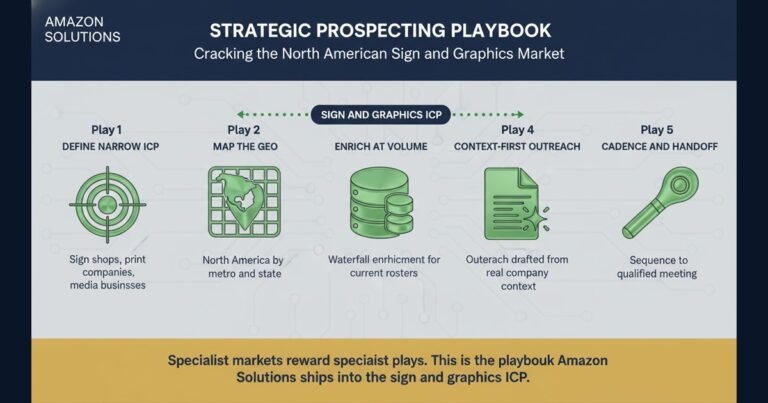
Graphictac’s SDR team uses a built-in Prospect Finder that connects to a 210M+ contact database. In minutes, a rep can search for sign shops, print companies, or media businesses by location, company size, or seniority — and import a curated list of qualified prospects directly into the CRM. What used to take hours of manual research now takes minutes.
Researching Contacts Instantly with AI
Before making a call or sending an email, an SDR needs context. The CRM’s integrated Claude AI generates instant Person Reports and Company Reports on any contact — surfacing background, role context, and conversation angles in seconds. SDRs walk into every outreach already knowing who they’re talking to and why it matters to them.
Logging Activity Without Slowing Down
Every call, email, and note is logged directly in the CRM with timestamps and user attribution. This means managers always have full visibility, and reps never lose track of where a conversation left off — even when managing dozens of active prospects simultaneously.
Sending Outreach from Within the Platform
The CRM integrates directly with Gmail, Outlook, and SMTP — so SDRs can draft and send personalized emails without switching tabs. With AI-assisted email drafting also built in, the time from research to first contact is dramatically compressed.
Should Your Company Have SDRs?
If your B2B business depends on outbound sales — meaning your team reaches out to potential clients rather than waiting for inbound leads — then having a dedicated SDR function makes a significant difference. It doesn’t have to mean hiring a large team. Even one or two SDRs, supported by the right technology, can dramatically increase the volume and quality of qualified opportunities entering your pipeline.
The key is giving them a system built for how they work. Generic CRM tools built for account managers don’t serve SDRs well — they need high-speed prospecting, fast research, and frictionless activity logging. That’s exactly what Amazon Solutions delivers.
How Amazon Solutions Supports SDR Teams
Whether you’re building an SDR function from scratch or upgrading the tools your existing team uses, Amazon Solutions designs and deploys custom CRM systems built around the SDR workflow. We’ve done it for Graphictac in the sign and graphics industry — and we can do it for your business, in your market, tailored to your team’s specific way of working.
Ready to give your SDRs the infrastructure they need to perform at their best? Contact Amazon Solutions today and let’s build the system your sales team deserves.
Related Resources
Learn more about related topics:
- What Is Sales Prospecting? — Find the right prospects for your SDR team
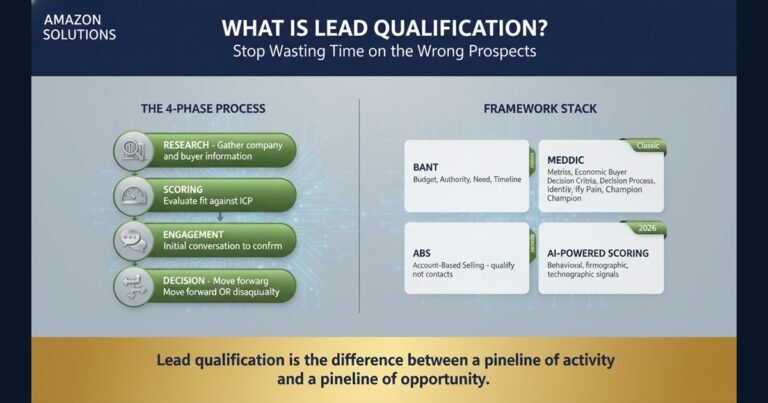
- What Is Lead Qualification? — How SDRs qualify leads before handoff
- The Business Case Story — See how an SDR system worked in practice
$497 GEO + SEO Site Audit
Want this kind of analysis run on your site?
We map your real visibility across ChatGPT, Perplexity, Claude, and Gemini — and hand you a prioritized fix list within 5 business days.
Book Your $497 Audit →