What Is Pipeline Management? How B2B Sales Leaders Keep Deals Moving and Revenue Predictable
For most B2B sales leaders, the end of the quarter brings a familiar anxiety: looking at the pipeline and wondering which deals will actually close, which are stuck, and whether the team will hit their number. That anxiety is almost always a symptom of poor pipeline management — and the good news is that it’s entirely solvable with the right system and habits in place.
What Is Pipeline Management?
Pipeline management is the process of tracking, analyzing, and actively advancing sales opportunities from initial contact through to closed deal. A well-managed pipeline gives sales leaders real-time visibility into the health of their revenue forecast — how many deals are in each stage, what their total value is, how long they’ve been sitting there, and what actions are needed to move them forward.
At the rep level, pipeline management is about discipline: updating deal stages accurately, following up on time, and taking consistent action to advance every active opportunity. At the leadership level, it’s about using pipeline data to coach reps, identify risks, and make accurate revenue forecasts.
Why Is Pipeline Management So Difficult for Most B2B Teams?
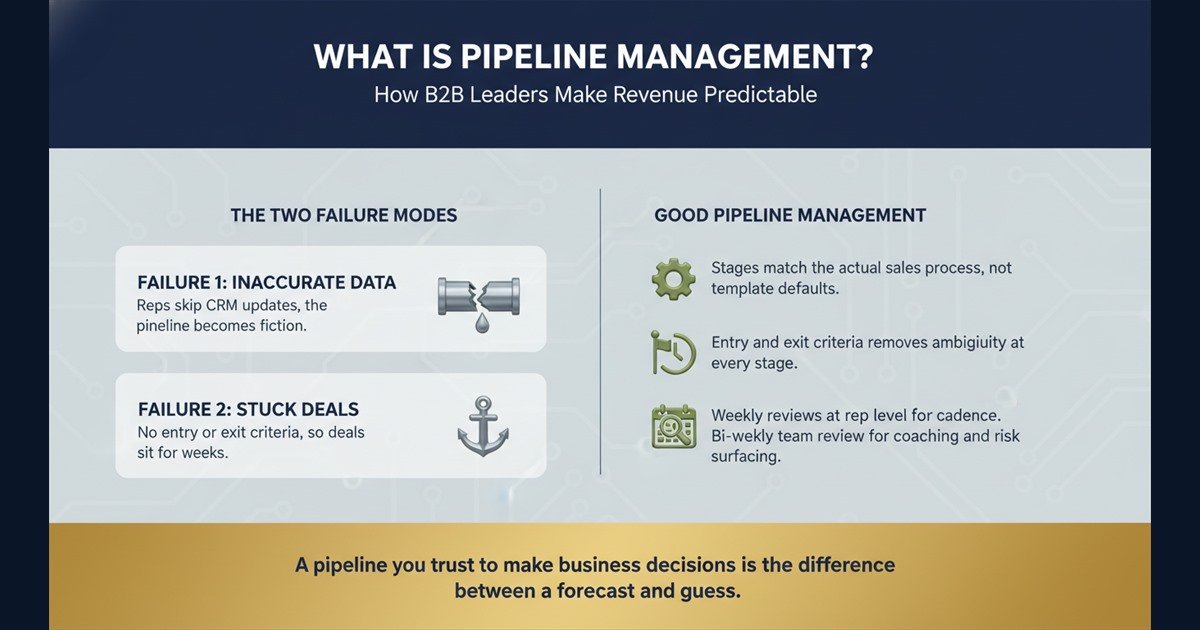
The most common problem is inaccurate data. When reps don’t update their CRM consistently, the pipeline becomes a fiction — a list of deals that looks impressive but doesn’t reflect reality. Managers make forecasts based on stale information, miss early warning signs of at-risk deals, and end up surprised at the end of the quarter.
The second most common problem is deals getting stuck. Without a structured process for advancing opportunities and clear criteria for what needs to happen at each stage, deals sit in the same stage for weeks or months — not progressing, not dying, just occupying mental bandwidth and distorting the forecast.
What Does Good Pipeline Management Look Like in Practice?
A well-managed pipeline starts with clearly defined stages that match your actual sales process — not a generic default. Each stage should have specific entry criteria (what needs to be true for a deal to move in) and exit criteria (what needs to happen for it to advance). This removes ambiguity and makes pipeline reviews far more productive.
Regular pipeline reviews — weekly for reps, bi-weekly or monthly for the team — keep deals honest and create accountability. The best managers use these sessions not just to review status, but to coach reps on specific deals, identify patterns, and remove obstacles.
How Does a CRM Make Pipeline Management Easier?
A well-configured CRM is the backbone of effective pipeline management. It should give managers an instant, accurate view of the entire pipeline — filterable by rep, stage, deal size, and close date. It should surface deals that haven’t been updated recently, flag opportunities where next steps are overdue, and automatically log activities so reps spend less time on data entry.
The best CRM systems also include forecasting tools that help leaders separate genuinely likely deals from wishful thinking — giving them the confidence to make real business decisions based on their pipeline.
How Amazon Solutions Builds Pipeline Systems That Work
At Amazon Solutions, we design CRM pipelines that are built around your actual sales process — with stages, fields, and automation that match how your team sells. The result is accurate, real-time pipeline visibility that sales leaders can actually trust to make decisions.
Ready to take control of your pipeline and make your revenue more predictable? Contact Amazon Solutions today.
$497 GEO + SEO Site Audit
Want this kind of analysis run on your site?
We map your real visibility across ChatGPT, Perplexity, Claude, and Gemini — and hand you a prioritized fix list within 5 business days.
Book Your $497 Audit →